Back to Blog

Hiring Excellence Backed by Data: What Top TA Teams Do Differently

We asked Starred’s Top 10 Hiring Teams from our 2026 Hiring Benchmarks Report to understand what separates their hiring performance from the rest. Despite facing the same challenges: rising application volumes, AI-driven processes, and increasing expectations, these teams outperformed their peers.

In this blog, we break down the six key trends behind their success, combining their insights with benchmark data to show what’s actually driving hiring performance today.

What Defines a Top Performing TA Team

What does it actually mean to be a top-performing TA team today?

The teams that consistently outperform are those that combine strong candidate experience with clear, structured recruitment process and measurable hiring outcomes. They operate with intention, designing their hiring systems to balance quality, efficiency and trust at every stage.

Starred's Top 10 Hiring Teams

Every year as part of our annual Benchmark Report, we celebrating excellence and high performance in the TA sector by featuring the organizations that have truly mastered the art of creating exceptional candidate and hiring manager experiences.

Recognizing that one size doesn't fit all in TA, Starred's Top 10 Hiring Teams are structured in two categories:

  1. Top 10 Emerging Hiring Teams (>1000 FTEs): Celebrating the agility, rapid growth and impactful strategies of smaller, fast-scaling companies building their world-class workforce quickly and efficiently.
  2. Top 10 Enterprise Hiring Teams (1000+ FTEs): Highlighting the achievements of large organizations navigating high-volume recruitment, complex global operations and highly specialized talent pools.

These teams significantly outperformed their peers on candidate experience, consistency and hiring performance.
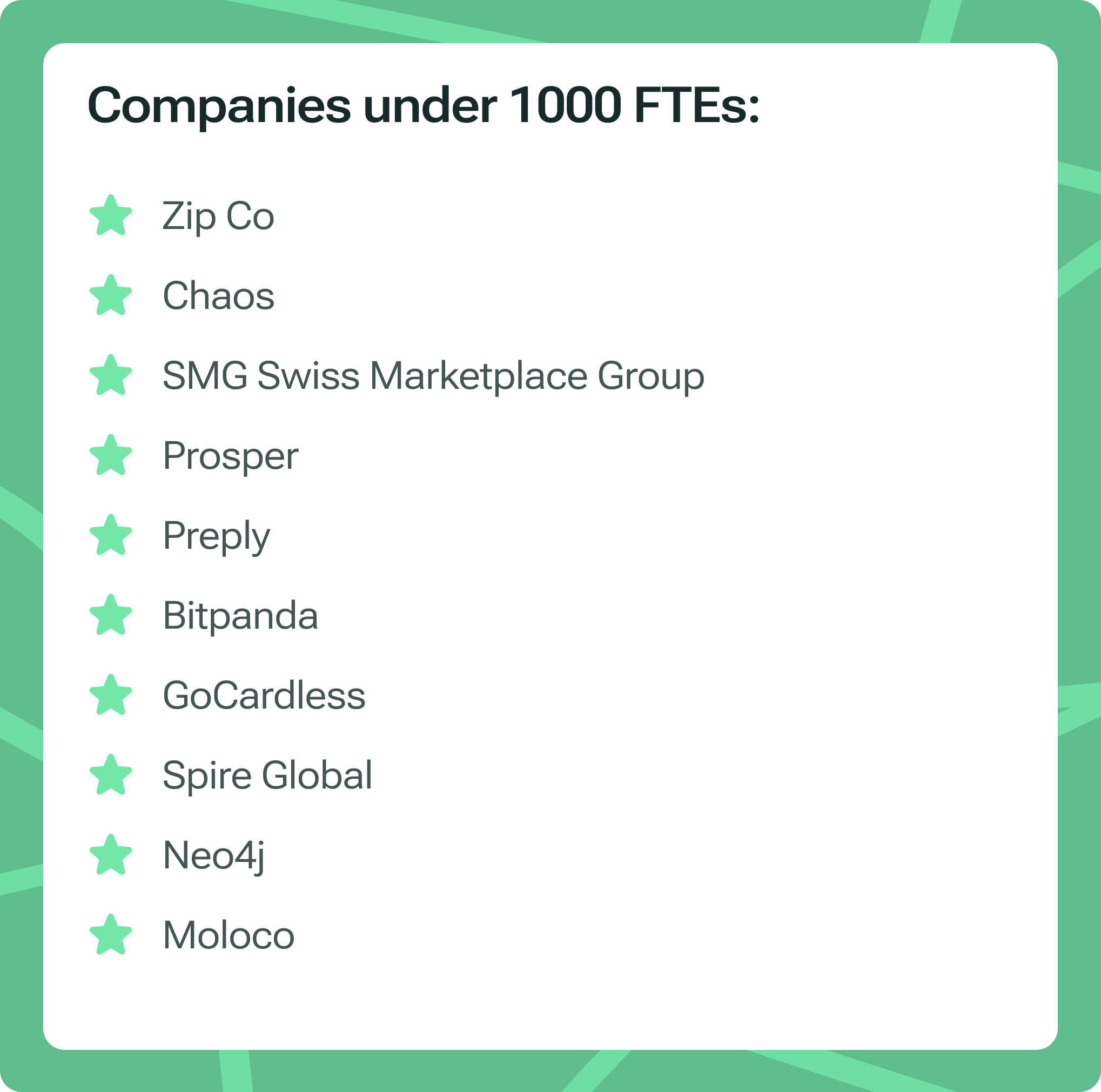
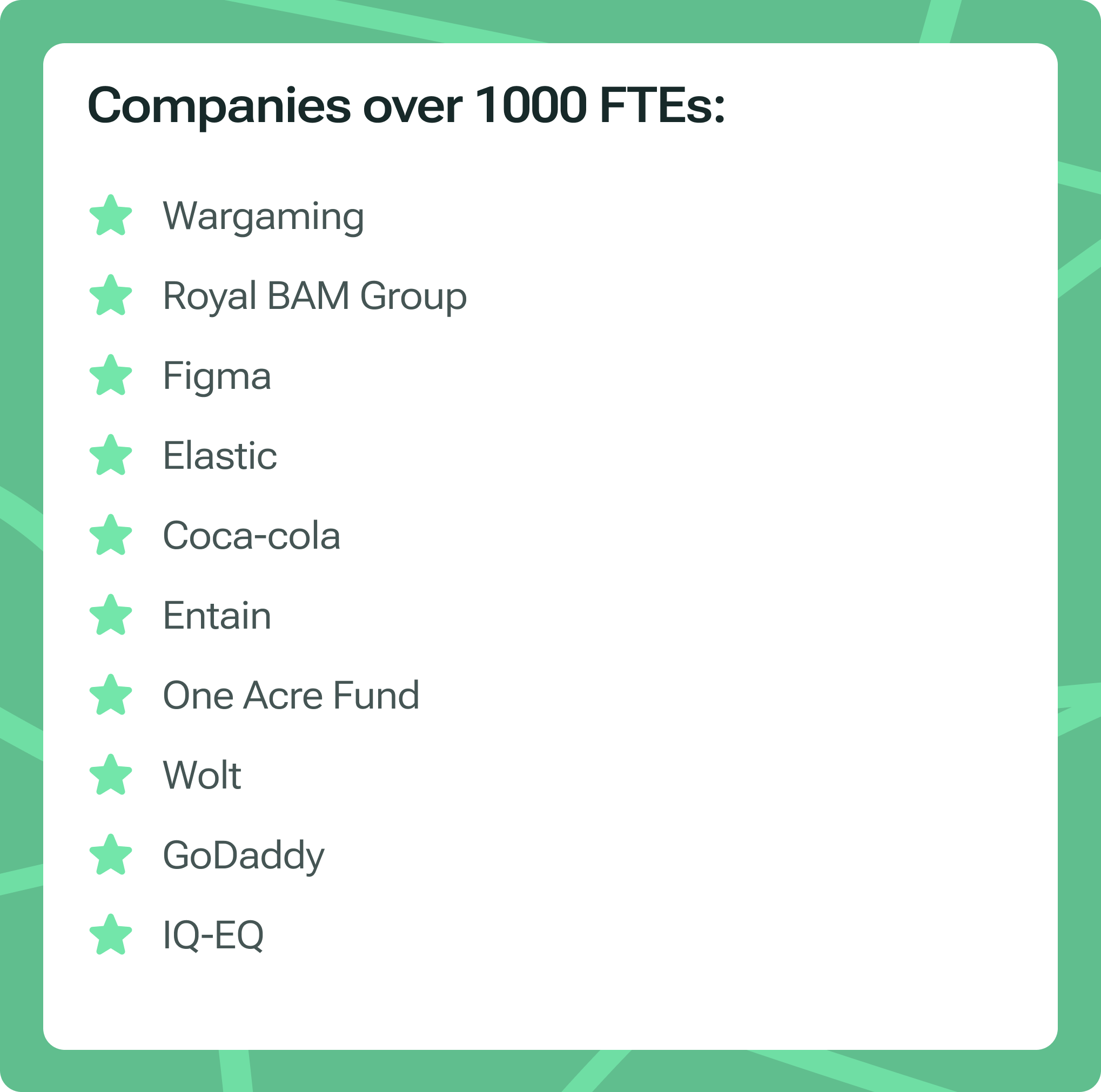
*Please note that the ranking above was created according to the weighted cNPS for each company.

6 Talent Acquisition Trends from Top-Performing Teams

To better understand what sets top performing Talent Acquisition teams apart, we asked Top 10 Hiring Teams with the highest cNPS from our latest benchmark report and analyzed the patterns behind their performance.
See the full breakdown of Starred's latest Benchmark data based on 2.5M+ hiring experiences!

Summary: 6 Key Takeaways from Top TA Teams

  1. Candidate experience is a baseline, not a differentiator
    All top-performing teams prioritize transparent communication, clear expectations, and consistent feedback, treating candidate experience as the foundation of their hiring strategy.
  2. Quality of hire is the North Star
    Teams measure success by long-term impact, using performance, retention, and hiring manager feedback to continuously improve hiring decisions.
  3. Clarity + structure drive everything else
    Speed and quality aren’t tradeoffs in the hiring process, but a byproduct of structured interviews, standardized frameworks and clear job descriptions, leading to better qualified candidates and straightforward internal processes.
  4. TA operates as a strategic business partner
    High-performing teams are active decision-makers, bringing market intelligence, historical data, and feedback insights to drive shared ownership of hiring outcomes.
  5. AI is widely used, but with clear guardrails
    Leading teams separate execution from decision-making: AI helps with admin and consistency of the process, humans own the outcomes and judgement.
  6. Feedback → action loop
    The best teams treat hiring as an evolving system using candidate and stakeholder feedback to identify friction and implement ongoing improvements.

1. Candidate Experience Is a Baseline for High Performance

Among top-performing teams, prioritizing positive candidate experience is treated as a baseline requirement for a successful talent strategy.

Every company that we interviewed prioritize candidate journey, but what stands out is how they do it. It’s the foundation the entire hiring process is built on. Candidate Experience is not left to chance, but seen as a clearly mapped out system, built on clear communication, transparency and consistent human touch throughout the process.


Author name
“We deliver a “white glove” experience characterized by regular and transparent communication with the candidate, including dedicated interview prep calls and disposition calls that offer high-level feedback.”
Dena Gajkowski
Head of Talent Acquisition at Prosper Marketplace

Author name
“We focused on regular check-ins, transparency, and quick, personalized feedback throughout the process. Candidates weren’t treated as transactions but as people making an important life decision.”
Evy van Galen
Director of Talent Acquisition at Preply

Author name
“We believe that shifting from “evaluating” to “consulting” candidates is what makes a difference. We are providing candidates with interview feedback loops and transparent timelines. Even for those we didn’t hire, we aimed for them to leave our process as brand advocates.”
The TA Team at GoCardless

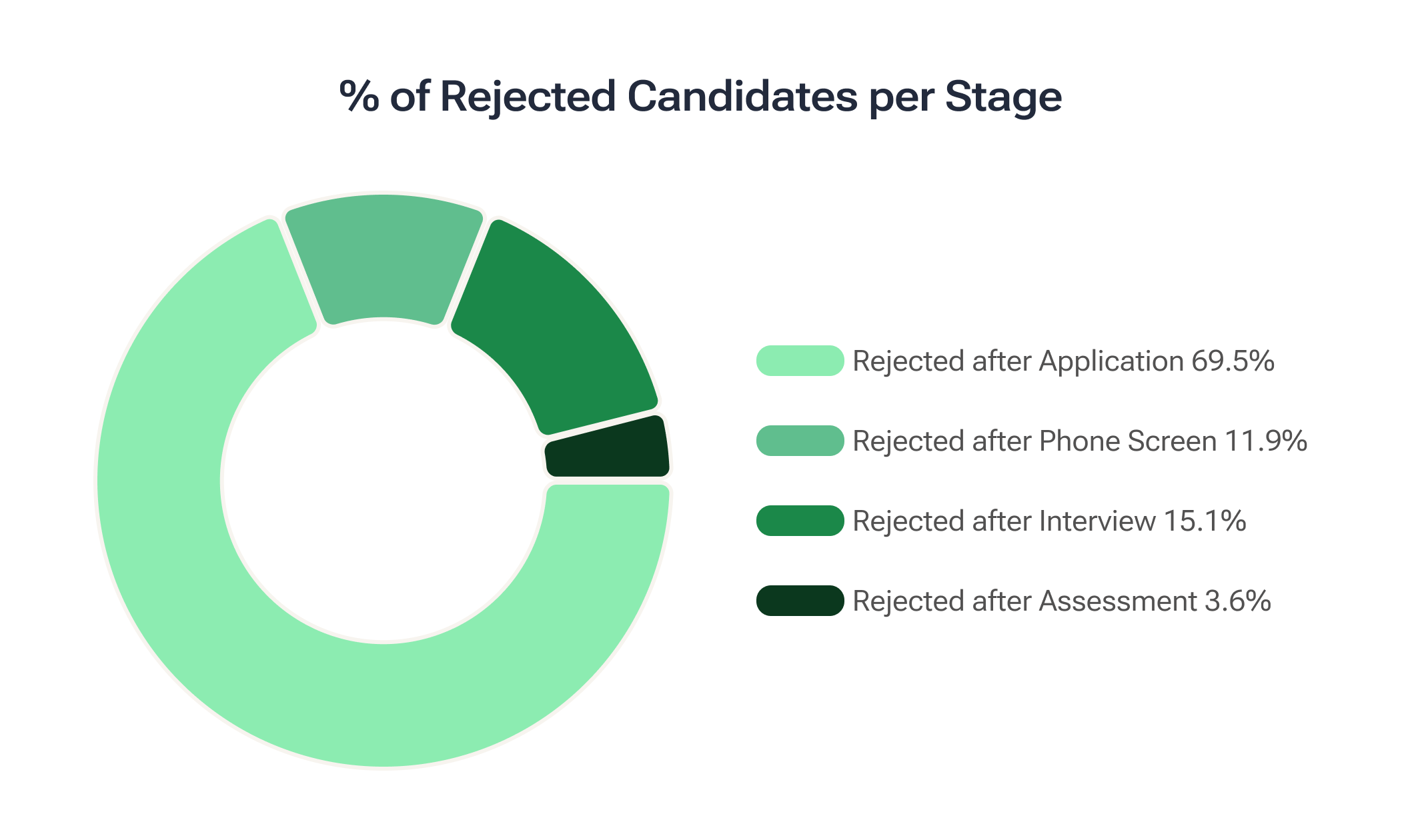
This becomes especially important when looking at how hiring has evolved. In 2025, nearly 70% of candidates were rejected at the application stage, meaning most job seekers might never interact with a human. Due to this shift, candidates have become skeptical of generic employer branding and automated rejection letters and except clear, role specific information from the start. This makes early-stage communication and meeting candidate expectations more important than before.

Rejected candidates by stage

Download the full breakdown of Starred's latest Benchmark data based on 2.5M+ hiring experiences!

Top-performing teams respond to this by making role expectations explicit from the start in the career site, maintaining transparency throughout the candidate journey and ensuring applicants always understand where they stand. Without this, the consequences of a poor candidate experience can be significant: longer time to hire, lower offer acceptance rates and higher risk of early turnover.

“I strongly believe that the personal touch is what truly differentiates high-performing TA teams. In a world of increasing automation, honest conversations (including clear feedback when it wasn’t the right fit) build trust and credibility on both sides.”
Lorena Deimel
Talent Acquisition & Employer Branding Specialist at SMG Swiss Marketplace Group

2. Quality of Hire becomes the North Star metric

In 82% of our interviews, Quality of Hire or decision quality was explicitly described as the most important outcome.

Rather than just focusing on speed or volume in isolation, these teams define success in terms of long-term impact: how well new hires perform, how quickly they become productive and how long they stay. This shifts hiring from a short-term process to a continuous performance loop.

Author name
“Quality of hire matters most - everything else flows from that. At Preply, we are focused on building high-performing teams, and that requires getting the right people in the door, not just filling roles quickly.”
Evy van Galen
Director of Talent Acquisition at Preply

Author name
"We are 100% focused on quality. We aim to source force-multiplier talent, provide every individual with a differentiated experience reflective of our values, and facilitate great hiring decisions.  When our priority is quality throughout the lifecycle, the outcomes like retention and HM satisfaction are byproducts of us getting that right."
Angela Miller
Head of Talent Acquisition at Moloco

What stands out is how these teams operationalize quality. Several of them reference structured hiring manager feedback, 6-12 month team member performance checkpoints and retention milestones as part of their feedback loop. In other words, hiring is evaluated not just at offer acceptance, but also once the new hire’s impact becomes visible inside the business.

Author name
“Quality of Hire is an important metric for the Talent Team. It’s not just about filling a role; it’s about how that person performs 6–12 months later. A fast hire who leaves in six months is a big loss for the business. If performance and regrettable attrition numbers are healthy, it proves our interview process is actually identifying the right skills and cultural alignment.“
The TA Team at GoCardless

As a result, traditional trade-offs start to disappear. Speed, candidate experience and hiring manager satisfaction are no longer competing priorities but result of a well integrated hiring process. If you want to start measuring Quality of Hire but don't know where to start, we can help!

3. Speed and Trust Are a Byproduct of Clarity and Structure

Top teams believe you earn speed through clarity: 91% of the companies interviewed emphasized structured interviews, standardized frameworks or clear job descriptions as performance levers. More than half explicitly described defining “what good looks like” even before opening a role.

Author name
"We optimize for decision quality and candidate trust. Speed follows when clarity is built in. When candidates & hiring teams clearly understand the role, the process, and what success looks like, we move faster and make better decisions without increasing volume or noise.”
Hannah Rodriguez
Head of Talent Acquisition, Canada & Americas (US region) at Zip Co

Author name
“The outcomes that matter most to me are quality of hire, candidate experience, and hiring manager confidence. These are the strongest indicators of sustainable hiring performance and long-term business impact. When those outcomes are strong, speed and retention tend to follow naturally.”
Daniel Cairney
Talent Acquisition & Candidate Experience Lead at Spire

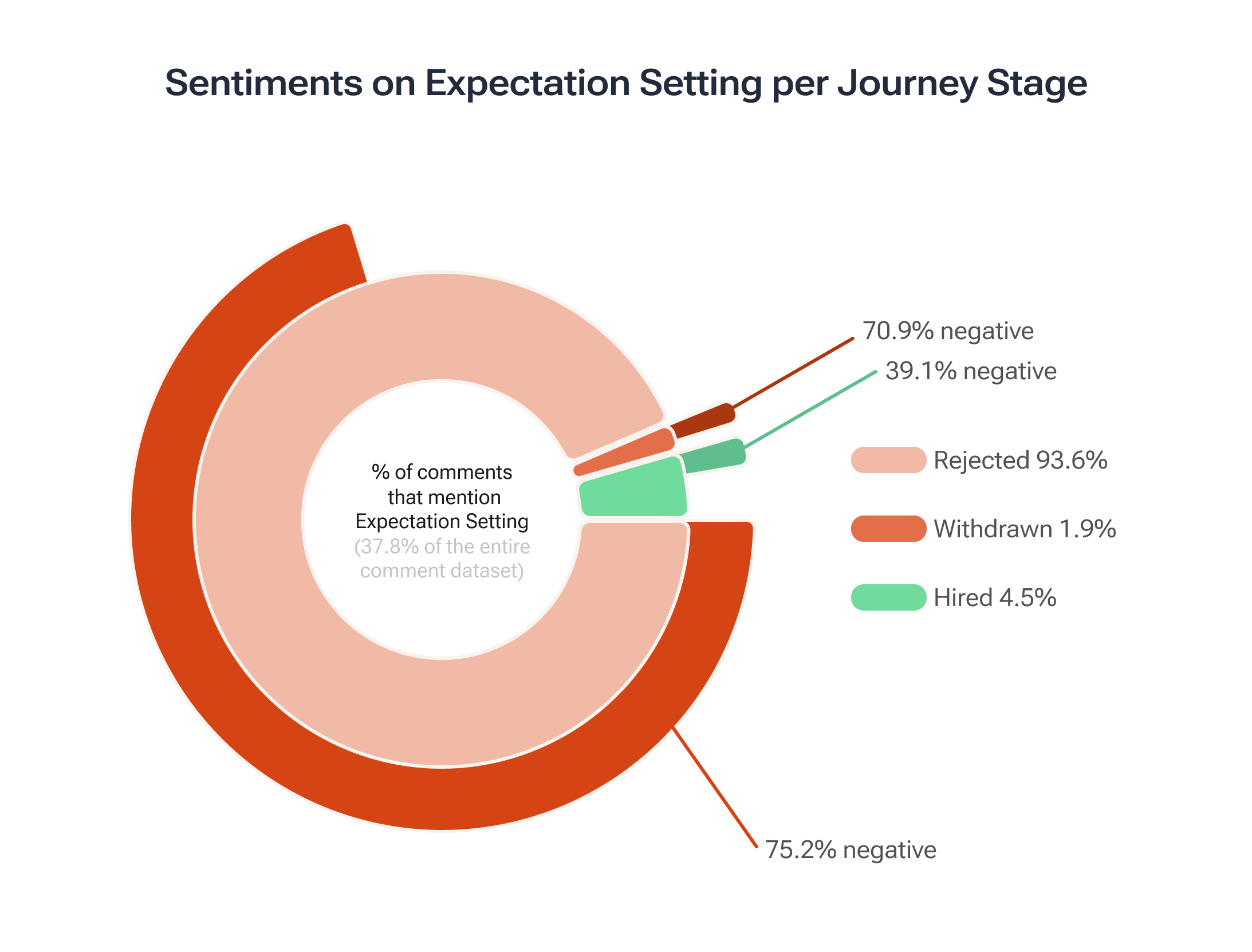
This approach directly addresses one of the challenges highlighted in the benchmark data: expectation setting is now the leading driver of candidate dissatisfaction, with over 37% of candidate comments referencing it and the majority carrying negative sentiment.

See the full breakdown of this trend in our Benchmarks report!

Top-performing teams reduce this friction by standardizing interview questions, using explicit evaluation criteria and ensuring interviewers are trained or certified. Some organizations even introduced formal, region-wide hiring frameworks to guarantee consistency. This systematic approach ensures candidates know exactly what they are being assessed on and hiring managers have a precise definition of strong performance, making successful outcomes highly predictable.

"Speed, quality, and candidate experience are closely related to the hiring manager’s involvement and engagement in the process. As a TA team, we are here to support, but moving fast and delivering a strong experience requires close collaboration and shared ownership.”
Caroline de Marion
HR & Talent Acquisition Manager at SMG Swiss Marketplace Group

Ultimately, this structure leads to better qualified candidates, minimizing the need for mid-funnel adjustments, which significantly reduces candidate withdrawal and misalignment down the line.

4. TA Leaders Act as Strategic Business Partners

Top teams have earned their seat at the table by consistently improving hiring outcomes and grounding their recommendations in data, not opinions. They bring market intelligence, historical performance data and feedback insights into workforce planning conversations. When trade-offs between speed, scope and quality need to be made, they make those trade-offs while keeping the business outcomes in mind. In many organizations hiring managers are not simply supported through the process; they are coached, enabled and held accountable for decision quality.

Author name
“High-performing TA teams operate as strategic partners rather than purely delivery teams. They are involved early, bring market insight into hiring decisions, challenge assumptions when needed, and stay focused on outcomes rather than activity. This approach enables more consistent, high-quality hiring.”
Daniel Cairney
Talent Acquisition & Candidate Experience Lead at Spire

 “Hiring is one of the most important leadership tasks, which shapes our performance and culture at SMG better than every program within the organization ever could.”
Florian Conradi
Head of Talent & Organizational Development at SMG Swiss Marketplace Group

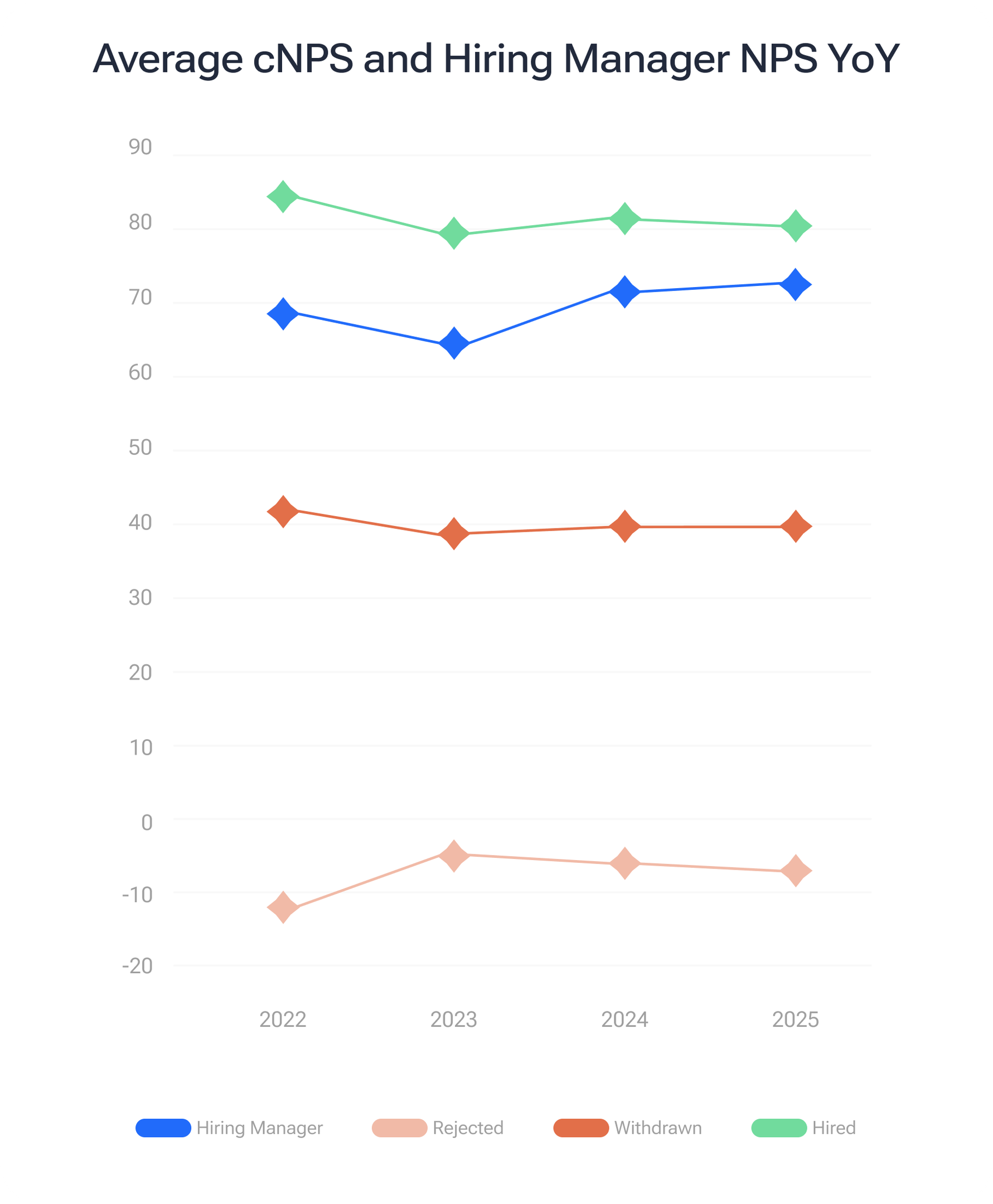
This shift to better cross functional collaboration shows up in the benchmark data as well: Hiring Manager NPS has increased significantly (now at +73), comparing to +65 in 2023.

One organization described how formalizing feedback loops and modernizing its hiring infrastructure increased Hiring Manager NPS from +10 to +60:

Author name
“We established a feedback loop between recruitment and the rest of the business, where we were able to demonstrate that we’re listening to and acting on feedback, which has played through into very strong engagement with the new system and processes among our hiring managers which saw our HM NPS score jump from +10 in the old ATS to +60.”
Peter Bradley-Kidd
Resourcing Process Improvement Lead at Entain

What teams need to be cautious about is that candidate experience has not followed at the same pace, highlighting a disconnect: strong internal alignment doesn’t automatically translate into a better candidate experience.

Download the full breakdown of Starred's latest Benchmark data!

Top-performing teams close this gap by ensuring that alignment, clarity and accountability exist on both sides: internally with hiring managers and recruiters, and externally with candidates. Hiring is treated as a shared business responsibility where TA shapes the conditions that determine hiring success and organizations reputation rather than simply managing the workflow.

Author name
"High performing TA teams care more. Every member of our team from coordination, sourcing, recruiting and operations cares deeply about what we do, and feels connected to our purpose.  Staying deeply connected to Moloco’s vision, and fostering a team culture of ownership in the success of that vision through talent, drives the human connection and thoughtfulness that differentiates us from more transactional operations."
Angela Miller
Head of Talent Acquisition at Moloco

5. AI Is Widely Used - But with Clear Guardrails

AI is now part of the day-to-day reality for most hiring teams, with 91% of the teams actively using AI in their hiring workflows. However, 64% explicitly state that AI is not used to make final hiring decisions. The pattern is clear: automation handles administrative load, while any decisions regarding candidates remain human. Tasks like scheduling, note-taking, and drafting communication are increasingly supported by AI, freeing up time for more meaningful human interaction.

At the same time, several companies reported new friction points introduced by AI, including job application volume spikes, authenticity concerns and weaker resume screening quality. With AI making it easier to for candidates to tailor CVs to job descriptions and mass-produce application materials, three companies explicitly reduced or avoided AI screening tools after observing a drop in quality.

“AI improved our efficiency and consistency but remained a support tool, not a replacement for human decision-making. We actively avoided using AI for automated CV filtering and emphasized human judgment for senior or niche roles.”
The TA Team at Chaos

This reflects a broader pattern in the benchmark data: nearly 70% of rejections happen at application stage with 22% of rejected candidates mentioning AI or automation in their feedback and over 60% of those comments are negative.

See the full breakdown of how candidates experience AI our Benchmarks report!

That’s why leaving early-stage hiring steps entirely to AI can backfire, hurting your employer brand and causing you to miss out on top talent.

Author name
“Every application is reviewed by a human, because motivation, transferable skills, and various small details are often missed by automated screening. We see AI as a useful assistant for reducing administrative work, but not as a decision-maker.”
Dainius Baniulis
Talent Acquisition Lead at Wargaming

Author name
“AI was helpful for creative tasks like drafting messaging and job descriptions, but it created new hurdles with record application volumes and difficulty validating the authenticity of candidate work. We also found AI tools weren’t successful in bringing the most relevant resumes to the top of the funnel, so we continue to review applications personally to ensure we don’t miss out on great talent.”
Dena Gajkowski
Head of Talent Acquisition at Prosper Marketplace

AI and automation isn’t going anywhere, so for future Talent Acquisition teams the competitive advantage will come from using AI intentionally, while keeping human judgment visible and central. To put it simple:

  1. Efficiency layer = AI
  2. Judgment layer = Human
  3. Transparency = Employer Brand & Trust building
Author name
"We believe Human-AI synergy will remain at the forefront for many areas, including talent acquisition. Combining automated efficiency with a high-touch candidate experience is the way to win the top talent in 2026."
The TA Team at GoCardless

6. The Hiring Process Evolves Through Feedback

“Feedback → Action” is the core performance loop for high-performing teams.

Across the Top 10, 82% treat hiring as a continuous improvement system that is constantly refined based on real signals from candidates, hiring managers and internal data. When patterns emerge, these teams act quickly, making targeted adjustments rather than waiting for larger issues to surface.

Hiring performance doesn’t improve through one major change, but through continuous, visible iteration. For example, one organization executed 224 system or process upgrades after reviewing over 300 change requests from candidate and stakeholder feedback in a single year. Similarly, another team cut a two-week test assignment down to one week following persistent complaints.

Author name
“We embrace change and innovation, striving for continuous improvement and not being afraid to fail fast and learn quickly. We encouraged ideas from across the team and over the year reviewed over 300 change requests, with 224 of those resulting in some form of system or process upgrade, then shouting about those through our “you said, we did” updates.”
Peter Bradley-Kidd
Resourcing Process Improvement Lead at Entain

Author name
“If we notice repetitive feedback about some certain issue during the process, we bring this feedback to the team and try to work it out together. The latest example was the feedback about the length of the test task. After receiving several complaints about the test task being too long, the team has agreed to shorten it and it reduced the completion time from about two weeks to one week.”
Dainius Baniulis
Talent Acquisition Lead at Wargaming

What sets them apart is treating feedback as a decision-making tool, identifying recurring friction points and resolving them at the source. This is especially important in a hiring environment where small issues, unclear timelines, slow feedback or misaligned expectations can quickly compound and impact outcomes.

Author name
“In ANZ, we focused on improving the parts of the hiring process that had the biggest impact on outcomes. We tested changes in live hiring, kept what worked, and stopped doing things that added effort without improving results.”
Tom Palmer
Senior Manager, Talent Acquisition (ANZ region) at Zip Co

Conclusion: What This Means for TA Teams in 2026

Across all six trends, one pattern is clear: high-performing hiring teams are focusing on being intentional in how their hiring strategies are designed.

Talent leaders design company culture where clarity drives decisions, candidate experience builds trust, and feedback continuously improves outcomes. AI skills plays a key role, but only when it supports not replaces human judgment.

As hiring becomes more complex in 2026, the teams that succeed will be those that stay transparent, reduce friction at the right moments, and connect candidate engagement to long-term hiring outcomes.

If you want to succeed just like the top-performing teams, you need visibility into how your hiring process is actually experienced. With Starred, you can connect candidate feedback, hiring performance and Quality of Hire into one measurable system. Let us show you how!

Back to Blog
Article quick links

Hiring Excellence Backed by Data: What Top TA Teams Do Differently

Details

We asked Starred’s Top 10 Hiring Teams from our 2026 Hiring Benchmarks Report to understand what separates their hiring performance from the rest. Despite facing the same challenges: rising application volumes, AI-driven processes, and increasing expectations, these teams outperformed their peers.

In this blog, we break down the six key trends behind their success, combining their insights with benchmark data to show what’s actually driving hiring performance today.

What Defines a Top Performing TA Team

What does it actually mean to be a top-performing TA team today?

The teams that consistently outperform are those that combine strong candidate experience with clear, structured recruitment process and measurable hiring outcomes. They operate with intention, designing their hiring systems to balance quality, efficiency and trust at every stage.

Starred's Top 10 Hiring Teams

Every year as part of our annual Benchmark Report, we celebrating excellence and high performance in the TA sector by featuring the organizations that have truly mastered the art of creating exceptional candidate and hiring manager experiences.

Recognizing that one size doesn't fit all in TA, Starred's Top 10 Hiring Teams are structured in two categories:

  1. Top 10 Emerging Hiring Teams (>1000 FTEs): Celebrating the agility, rapid growth and impactful strategies of smaller, fast-scaling companies building their world-class workforce quickly and efficiently.
  2. Top 10 Enterprise Hiring Teams (1000+ FTEs): Highlighting the achievements of large organizations navigating high-volume recruitment, complex global operations and highly specialized talent pools.

These teams significantly outperformed their peers on candidate experience, consistency and hiring performance.

*Please note that the ranking above was created according to the weighted cNPS for each company.

6 Talent Acquisition Trends from Top-Performing Teams

To better understand what sets top performing Talent Acquisition teams apart, we asked Top 10 Hiring Teams with the highest cNPS from our latest benchmark report and analyzed the patterns behind their performance.

See the full breakdown of Starred's latest Benchmark data based on 2.5M+ hiring experiences!

Summary: 6 Key Takeaways from Top TA Teams

  1. Candidate experience is a baseline, not a differentiator
    All top-performing teams prioritize transparent communication, clear expectations, and consistent feedback, treating candidate experience as the foundation of their hiring strategy.
  2. Quality of hire is the North Star
    Teams measure success by long-term impact, using performance, retention, and hiring manager feedback to continuously improve hiring decisions.
  3. Clarity + structure drive everything else
    Speed and quality aren’t tradeoffs in the hiring process, but a byproduct of structured interviews, standardized frameworks and clear job descriptions, leading to better qualified candidates and straightforward internal processes.
  4. TA operates as a strategic business partner
    High-performing teams are active decision-makers, bringing market intelligence, historical data, and feedback insights to drive shared ownership of hiring outcomes.
  5. AI is widely used, but with clear guardrails
    Leading teams separate execution from decision-making: AI helps with admin and consistency of the process, humans own the outcomes and judgement.
  6. Feedback → action loop
    The best teams treat hiring as an evolving system using candidate and stakeholder feedback to identify friction and implement ongoing improvements.

1. Candidate Experience Is a Baseline for High Performance

Among top-performing teams, prioritizing positive candidate experience is treated as a baseline requirement for a successful talent strategy.

Every company that we interviewed prioritize candidate journey, but what stands out is how they do it. It’s the foundation the entire hiring process is built on. Candidate Experience is not left to chance, but seen as a clearly mapped out system, built on clear communication, transparency and consistent human touch throughout the process.

Author name
“We deliver a “white glove” experience characterized by regular and transparent communication with the candidate, including dedicated interview prep calls and disposition calls that offer high-level feedback.”
Dena Gajkowski
Head of Talent Acquisition at Prosper Marketplace

Author name
“We focused on regular check-ins, transparency, and quick, personalized feedback throughout the process. Candidates weren’t treated as transactions but as people making an important life decision.”
Evy van Galen
Director of Talent Acquisition at Preply

Author name
“We believe that shifting from “evaluating” to “consulting” candidates is what makes a difference. We are providing candidates with interview feedback loops and transparent timelines. Even for those we didn’t hire, we aimed for them to leave our process as brand advocates.”
The TA Team at GoCardless

This becomes especially important when looking at how hiring has evolved. In 2025, nearly 70% of candidates were rejected at the application stage, meaning most job seekers might never interact with a human. Due to this shift, candidates have become skeptical of generic employer branding and automated rejection letters and except clear, role specific information from the start. This makes early-stage communication and meeting candidate expectations more important than before.
Rejected candidates by stage

Download the full breakdown of Starred's latest Benchmark data based on 2.5M+ hiring experiences!

Top-performing teams respond to this by making role expectations explicit from the start in the career site, maintaining transparency throughout the candidate journey and ensuring applicants always understand where they stand. Without this, the consequences of a poor candidate experience can be significant: longer time to hire, lower offer acceptance rates and higher risk of early turnover.

“I strongly believe that the personal touch is what truly differentiates high-performing TA teams. In a world of increasing automation, honest conversations (including clear feedback when it wasn’t the right fit) build trust and credibility on both sides.”
Lorena Deimel
Talent Acquisition & Employer Branding Specialist at SMG Swiss Marketplace Group

2. Quality of Hire becomes the North Star metric

In 82% of our interviews, Quality of Hire or decision quality was explicitly described as the most important outcome.

Rather than just focusing on speed or volume in isolation, these teams define success in terms of long-term impact: how well new hires perform, how quickly they become productive and how long they stay. This shifts hiring from a short-term process to a continuous performance loop.

Author name
“Quality of hire matters most - everything else flows from that. At Preply, we are focused on building high-performing teams, and that requires getting the right people in the door, not just filling roles quickly.”
Evy van Galen
Director of Talent Acquisition at Preply

Author name
"We are 100% focused on quality. We aim to source force-multiplier talent, provide every individual with a differentiated experience reflective of our values, and facilitate great hiring decisions.  When our priority is quality throughout the lifecycle, the outcomes like retention and HM satisfaction are byproducts of us getting that right."
Angela Miller
Head of Talent Acquisition at Moloco

What stands out is how these teams operationalize quality. Several of them reference structured hiring manager feedback, 6-12 month team member performance checkpoints and retention milestones as part of their feedback loop. In other words, hiring is evaluated not just at offer acceptance, but also once the new hire’s impact becomes visible inside the business.

Author name
“Quality of Hire is an important metric for the Talent Team. It’s not just about filling a role; it’s about how that person performs 6–12 months later. A fast hire who leaves in six months is a big loss for the business. If performance and regrettable attrition numbers are healthy, it proves our interview process is actually identifying the right skills and cultural alignment.“
The TA Team at GoCardless

As a result, traditional trade-offs start to disappear. Speed, candidate experience and hiring manager satisfaction are no longer competing priorities but result of a well integrated hiring process. If you want to start measuring Quality of Hire but don't know where to start, we can help!
3. Speed and Trust Are a Byproduct of Clarity and Structure

Top teams believe you earn speed through clarity: 91% of the companies interviewed emphasized structured interviews, standardized frameworks or clear job descriptions as performance levers. More than half explicitly described defining “what good looks like” even before opening a role.


Author name
"We optimize for decision quality and candidate trust. Speed follows when clarity is built in. When candidates & hiring teams clearly understand the role, the process, and what success looks like, we move faster and make better decisions without increasing volume or noise.”
Hannah Rodriguez
Head of Talent Acquisition, Canada & Americas (US region) at Zip Co

Author name
“The outcomes that matter most to me are quality of hire, candidate experience, and hiring manager confidence. These are the strongest indicators of sustainable hiring performance and long-term business impact. When those outcomes are strong, speed and retention tend to follow naturally.”
Daniel Cairney
Talent Acquisition & Candidate Experience Lead at Spire

This approach directly addresses one of the challenges highlighted in the benchmark data: expectation setting is now the leading driver of candidate dissatisfaction, with over 37% of candidate comments referencing it and the majority carrying negative sentiment.
See the full breakdown of this trend in our Benchmarks report!

Top-performing teams reduce this friction by standardizing interview questions, using explicit evaluation criteria and ensuring interviewers are trained or certified. Some organizations even introduced formal, region-wide hiring frameworks to guarantee consistency. This systematic approach ensures candidates know exactly what they are being assessed on and hiring managers have a precise definition of strong performance, making successful outcomes highly predictable.

"Speed, quality, and candidate experience are closely related to the hiring manager’s involvement and engagement in the process. As a TA team, we are here to support, but moving fast and delivering a strong experience requires close collaboration and shared ownership.”
Caroline de Marion
HR & Talent Acquisition Manager at SMG Swiss Marketplace Group

Ultimately, this structure leads to better qualified candidates, minimizing the need for mid-funnel adjustments, which significantly reduces candidate withdrawal and misalignment down the line.

4. TA Leaders Act as Strategic Business Partners

Top teams have earned their seat at the table by consistently improving hiring outcomes and grounding their recommendations in data, not opinions. They bring market intelligence, historical performance data and feedback insights into workforce planning conversations. When trade-offs between speed, scope and quality need to be made, they make those trade-offs while keeping the business outcomes in mind. In many organizations hiring managers are not simply supported through the process; they are coached, enabled and held accountable for decision quality.

Author name
“High-performing TA teams operate as strategic partners rather than purely delivery teams. They are involved early, bring market insight into hiring decisions, challenge assumptions when needed, and stay focused on outcomes rather than activity. This approach enables more consistent, high-quality hiring.”
Daniel Cairney
Talent Acquisition & Candidate Experience Lead at Spire

 “Hiring is one of the most important leadership tasks, which shapes our performance and culture at SMG better than every program within the organization ever could.”
Florian Conradi
Head of Talent & Organizational Development at SMG Swiss Marketplace Group

This shift to better cross functional collaboration shows up in the benchmark data as well: Hiring Manager NPS has increased significantly (now at +73), comparing to +65 in 2023.

One organization described how formalizing feedback loops and modernizing its hiring infrastructure increased Hiring Manager NPS from +10 to +60:

Author name
“We established a feedback loop between recruitment and the rest of the business, where we were able to demonstrate that we’re listening to and acting on feedback, which has played through into very strong engagement with the new system and processes among our hiring managers which saw our HM NPS score jump from +10 in the old ATS to +60.”
Peter Bradley-Kidd
Resourcing Process Improvement Lead at Entain

What teams need to be cautious about is that candidate experience has not followed at the same pace, highlighting a disconnect: strong internal alignment doesn’t automatically translate into a better candidate experience.
Download the full breakdown of Starred's latest Benchmark data!

Top-performing teams close this gap by ensuring that alignment, clarity and accountability exist on both sides: internally with hiring managers and recruiters, and externally with candidates. Hiring is treated as a shared business responsibility where TA shapes the conditions that determine hiring success and organizations reputation rather than simply managing the workflow.

Author name
"High performing TA teams care more. Every member of our team from coordination, sourcing, recruiting and operations cares deeply about what we do, and feels connected to our purpose.  Staying deeply connected to Moloco’s vision, and fostering a team culture of ownership in the success of that vision through talent, drives the human connection and thoughtfulness that differentiates us from more transactional operations."
Angela Miller
Head of Talent Acquisition at Moloco

5. AI Is Widely Used - But with Clear Guardrails

AI is now part of the day-to-day reality for most hiring teams, with 91% of the teams actively using AI in their hiring workflows. However, 64% explicitly state that AI is not used to make final hiring decisions. The pattern is clear: automation handles administrative load, while any decisions regarding candidates remain human. Tasks like scheduling, note-taking, and drafting communication are increasingly supported by AI, freeing up time for more meaningful human interaction.

At the same time, several companies reported new friction points introduced by AI, including job application volume spikes, authenticity concerns and weaker resume screening quality. With AI making it easier to for candidates to tailor CVs to job descriptions and mass-produce application materials, three companies explicitly reduced or avoided AI screening tools after observing a drop in quality.

“AI improved our efficiency and consistency but remained a support tool, not a replacement for human decision-making. We actively avoided using AI for automated CV filtering and emphasized human judgment for senior or niche roles.”
The TA Team at Chaos

This reflects a broader pattern in the benchmark data: nearly 70% of rejections happen at application stage with 22% of rejected candidates mentioning AI or automation in their feedback and over 60% of those comments are negative.

See the full breakdown of how candidates experience AI our Benchmarks report!

That’s why leaving early-stage hiring steps entirely to AI can backfire, hurting your employer brand and causing you to miss out on top talent.

Author name
“Every application is reviewed by a human, because motivation, transferable skills, and various small details are often missed by automated screening. We see AI as a useful assistant for reducing administrative work, but not as a decision-maker.”
Dainius Baniulis
Talent Acquisition Lead at Wargaming

Author name
“AI was helpful for creative tasks like drafting messaging and job descriptions, but it created new hurdles with record application volumes and difficulty validating the authenticity of candidate work. We also found AI tools weren’t successful in bringing the most relevant resumes to the top of the funnel, so we continue to review applications personally to ensure we don’t miss out on great talent.”
Dena Gajkowski
Head of Talent Acquisition at Prosper Marketplace

AI and automation isn’t going anywhere, so for future Talent Acquisition teams the competitive advantage will come from using AI intentionally, while keeping human judgment visible and central. To put it simple:

  1. Efficiency layer = AI
  2. Judgment layer = Human
  3. Transparency = Employer Brand & Trust building
Author name
"We believe Human-AI synergy will remain at the forefront for many areas, including talent acquisition. Combining automated efficiency with a high-touch candidate experience is the way to win the top talent in 2026."
The TA Team at GoCardless

6. The Hiring Process Evolves Through Feedback

“Feedback → Action” is the core performance loop for high-performing teams.

Across the Top 10, 82% treat hiring as a continuous improvement system that is constantly refined based on real signals from candidates, hiring managers and internal data. When patterns emerge, these teams act quickly, making targeted adjustments rather than waiting for larger issues to surface.

Hiring performance doesn’t improve through one major change, but through continuous, visible iteration. For example, one organization executed 224 system or process upgrades after reviewing over 300 change requests from candidate and stakeholder feedback in a single year. Similarly, another team cut a two-week test assignment down to one week following persistent complaints.

Author name
“We embrace change and innovation, striving for continuous improvement and not being afraid to fail fast and learn quickly. We encouraged ideas from across the team and over the year reviewed over 300 change requests, with 224 of those resulting in some form of system or process upgrade, then shouting about those through our “you said, we did” updates.”
Peter Bradley-Kidd
Resourcing Process Improvement Lead at Entain

Author name
“If we notice repetitive feedback about some certain issue during the process, we bring this feedback to the team and try to work it out together. The latest example was the feedback about the length of the test task. After receiving several complaints about the test task being too long, the team has agreed to shorten it and it reduced the completion time from about two weeks to one week.”
Dainius Baniulis
Talent Acquisition Lead at Wargaming

What sets them apart is treating feedback as a decision-making tool, identifying recurring friction points and resolving them at the source. This is especially important in a hiring environment where small issues, unclear timelines, slow feedback or misaligned expectations can quickly compound and impact outcomes.

Author name
“In ANZ, we focused on improving the parts of the hiring process that had the biggest impact on outcomes. We tested changes in live hiring, kept what worked, and stopped doing things that added effort without improving results.”
Tom Palmer
Senior Manager, Talent Acquisition (ANZ region) at Zip Co

Conclusion: What This Means for TA Teams in 2026

Across all six trends, one pattern is clear: high-performing hiring teams are focusing on being intentional in how their hiring strategies are designed.

Talent leaders design company culture where clarity drives decisions, candidate experience builds trust, and feedback continuously improves outcomes. AI skills plays a key role, but only when it supports not replaces human judgment.

As hiring becomes more complex in 2026, the teams that succeed will be those that stay transparent, reduce friction at the right moments, and connect candidate engagement to long-term hiring outcomes.

If you want to succeed just like the top-performing teams, you need visibility into how your hiring process is actually experienced. With Starred, you can connect candidate feedback, hiring performance and Quality of Hire into one measurable system. Let us show you how!

Hiring success tips right in your inbox

Want to find out more? Speak to one of our Candidate Experience experts!